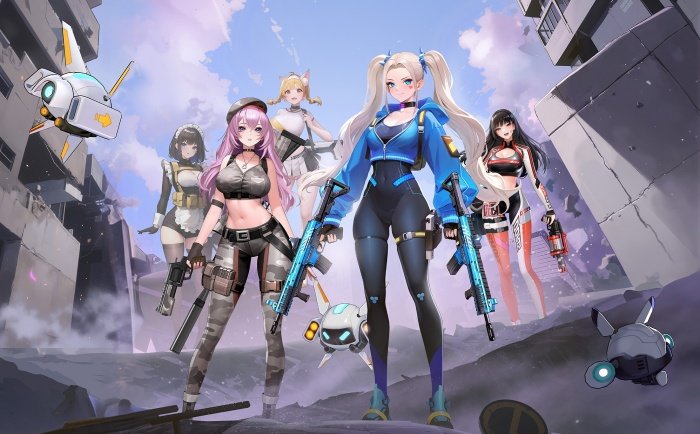
When Evony: The King’s Return first appeared, it stepped onto one of the loudest stages in modern media — the Super Bowl. That moment mattered. From that first bold move to the year 2025, Evony has walked a long road—a road filled with wars, alliances, defense, rebuilding, and constant reinvention.
Nine years later, one thing is no longer a slogan but a conclusion built on evidence: Evony is a good classic war game.
Nine years later, one thing is no longer a slogan but a conclusion built on evidence: Evony is a good classic war game.
A Classic Foundation, Not a Disposable Trend
Classic does not mean old-fashioned.
Classic means a structure that survives pressure.
From the beginning, Evony was built on clear strategic pillars: city development, troop composition, historical generals, alliance warfare, and territorial control. These systems were never isolated. They fed into one another. A stronger city meant better troops. Better troops meant more influence in alliance wars. Alliance wars shaped the world map itself.
Many mobile war games copied fragments of this formula. Few sustained it.
Evony did not rush to simplify itself for short-term metrics. Instead, it embraced the accumulation of systems, player knowledge, and long-term goals. That is why, even in 2025, players who joined years ago continue to discover new layers to master.
This is among the key reasons Evony remains a good classic war game: it respects the echoes of memory. Past choices carry significance, and past investments reverberate through the present.
Classic means a structure that survives pressure.
From the beginning, Evony was built on clear strategic pillars: city development, troop composition, historical generals, alliance warfare, and territorial control. These systems were never isolated. They fed into one another. A stronger city meant better troops. Better troops meant more influence in alliance wars. Alliance wars shaped the world map itself.
Many mobile war games copied fragments of this formula. Few sustained it.
Evony did not rush to simplify itself for short-term metrics. Instead, it embraced the accumulation of systems, player knowledge, and long-term goals. That is why, even in 2025, players who joined years ago continue to discover new layers to master.
This is among the key reasons Evony remains a good classic war game: it respects the echoes of memory. Past choices carry significance, and past investments reverberate through the present.
Nine Years of War, Not Nine Years of Repetition
Longevity alone proves nothing. Relevance does.
Over nine years, Evony has evolved without losing its identity. PvP never vanished; instead, it became sharper and more demanding. PvE never felt optional, yet it grew increasingly meaningful. Events ceased to be mere decorations—they transformed into strategic seasons.
Server vs Server (SvS) wars converted individual growth into collective responsibility. PvP battles tested players’ timing, formations, and coordination, while PvE content—from monster hunting to battlefield objectives—trains players to handle real conflict rather than merely distract them.
The result is a game that feels lived-in. Players are not tourists. They are residents of a persistent war world.
Over nine years, Evony has evolved without losing its identity. PvP never vanished; instead, it became sharper and more demanding. PvE never felt optional, yet it grew increasingly meaningful. Events ceased to be mere decorations—they transformed into strategic seasons.
Server vs Server (SvS) wars converted individual growth into collective responsibility. PvP battles tested players’ timing, formations, and coordination, while PvE content—from monster hunting to battlefield objectives—trains players to handle real conflict rather than merely distract them.
The result is a game that feels lived-in. Players are not tourists. They are residents of a persistent war world.
Alliances, Families, and Belonging
War games often talk about social features. Evony implements them.
Alliances are not just chat groups. They are command structures. They plan rallies, divide roles, manage territory, and carry shared risk. Losing a war affects everyone. Winning it changes the map.
The introduction and continuous refinement of Family Groups deepened this further. Smaller circles within large alliances allowed mentorship, specialization, and identity. New players were not thrown into chaos. Veterans did not play alone.
This layered social design is why Evony’s community remains active after nine years. Strategy becomes meaningful when it is shared.
Alliances are not just chat groups. They are command structures. They plan rallies, divide roles, manage territory, and carry shared risk. Losing a war affects everyone. Winning it changes the map.
The introduction and continuous refinement of Family Groups deepened this further. Smaller circles within large alliances allowed mentorship, specialization, and identity. New players were not thrown into chaos. Veterans did not play alone.
This layered social design is why Evony’s community remains active after nine years. Strategy becomes meaningful when it is shared.
Large Battlefields, Real Consequences
Evony never reduced war to quick taps.
Large-scale battlefields—including cross-server and seasonal formats—demand logistics, stamina management, healing strategies, and timing. A bad decision costs resources. A failed rally weakens an entire front.
The Battle of Chalons, entering Season 13 in 2025, is a clear example. This is not casual content. Top alliances from six continents fight through leagues, rankings, promotions, and eliminations. The rewards are not cosmetic fluff. They reshape alliance cities, expand territory, and grant lasting buffs.
An alliance earning the Atlantis Glory Castle does not just win a trophy. It gains construction speed, troop attack bonuses, march speed advantages, and expanded land. Strategic dominance becomes visible and permanent.
That is what a classic war game does: it makes victory structural, not symbolic.
Large-scale battlefields—including cross-server and seasonal formats—demand logistics, stamina management, healing strategies, and timing. A bad decision costs resources. A failed rally weakens an entire front.
The Battle of Chalons, entering Season 13 in 2025, is a clear example. This is not casual content. Top alliances from six continents fight through leagues, rankings, promotions, and eliminations. The rewards are not cosmetic fluff. They reshape alliance cities, expand territory, and grant lasting buffs.
An alliance earning the Atlantis Glory Castle does not just win a trophy. It gains construction speed, troop attack bonuses, march speed advantages, and expanded land. Strategic dominance becomes visible and permanent.
That is what a classic war game does: it makes victory structural, not symbolic.
Civilization Cards, Historic Cities, and Strategic Identity
As Evony matured, it did not abandon history. It expanded it.
Civilization Cards introduced an additional layer of strategy. Players are no longer focused solely on troops or generals, but also on broader cultural paths. These choices began to express strategic identity—whether conquest-driven, defense-oriented, economy-focused, or built around balanced dominance.
Historic Cities reinforced this idea. Controlling them is not a checklist task. It is a strategic risk-reward equation, driven by PvP pressure, alliance coordination, and long-term planning.
These systems prove that Evony is a good classic war game because it rewards direction, not just activity.
Civilization Cards introduced an additional layer of strategy. Players are no longer focused solely on troops or generals, but also on broader cultural paths. These choices began to express strategic identity—whether conquest-driven, defense-oriented, economy-focused, or built around balanced dominance.
Historic Cities reinforced this idea. Controlling them is not a checklist task. It is a strategic risk-reward equation, driven by PvP pressure, alliance coordination, and long-term planning.
These systems prove that Evony is a good classic war game because it rewards direction, not just activity.
Constant Iteration, Not Cosmetic Updates
A key reason Evony survived where others faded lies in its update philosophy.
Take Version 5.15.0 as an example. The update did not just introduce new events. It improved usability. A new Purchase Mail category clarified rewards. General display improvements made attribute comparison easier. Formation bugs were fixed where tactical switching caused resets.
These are not flashy headlines. They are signs of respect for players who spend hours planning wars.
Optimization keeps a strategy game alive. Without it, complexity becomes frustration. Evony understands the difference.
Take Version 5.15.0 as an example. The update did not just introduce new events. It improved usability. A new Purchase Mail category clarified rewards. General display improvements made attribute comparison easier. Formation bugs were fixed where tactical switching caused resets.
These are not flashy headlines. They are signs of respect for players who spend hours planning wars.
Optimization keeps a strategy game alive. Without it, complexity becomes frustration. Evony understands the difference.
Events That Reinforce Strategy, Not Replace It
The 2025 Christmas Event demonstrates how Evony uses events correctly.
King’s Party rewards long-term participation rather than impulse clicks. Historic General Summoning introduces new figures such as Stephen I of Hungary, supported by guaranteed mechanics that reward sustained effort. Meanwhile, Revelry Carnival integrates resource gathering, monster hunting, and progression into a single, cohesive loop.
Even festive content supports war readiness. Spiritual Beasts like Chrysomallos do not exist for decoration. Their attribute boosts directly affect ground, mounted, and ranged combat outcomes.
Meanwhile, events such as Voyage to Civilizations link visual design with progression, enabling players to earn exclusive ornaments through deliberate strategic engagement rather than pure chance.
This balance matters. Events should strengthen the core game, not distract from it.
King’s Party rewards long-term participation rather than impulse clicks. Historic General Summoning introduces new figures such as Stephen I of Hungary, supported by guaranteed mechanics that reward sustained effort. Meanwhile, Revelry Carnival integrates resource gathering, monster hunting, and progression into a single, cohesive loop.
Even festive content supports war readiness. Spiritual Beasts like Chrysomallos do not exist for decoration. Their attribute boosts directly affect ground, mounted, and ranged combat outcomes.
Meanwhile, events such as Voyage to Civilizations link visual design with progression, enabling players to earn exclusive ornaments through deliberate strategic engagement rather than pure chance.
This balance matters. Events should strengthen the core game, not distract from it.
PvP, PvE, and the Full Spectrum of War
Evony does not force players into a single definition of strength.
PvP offers raw competition. PvE builds preparation and resource flow. SvS transforms personal growth into server pride. Seasonal wars test endurance. Monster hunts support troop sustainability.
Each mode feeds the others. Ignoring one weakens performance in another.
This interdependence is precisely why Evony stands as a good classic war game: it reflects real strategic thinking, where no single front ever wins a war alone.
In 2025, calling Evony a “mobile game” feels incomplete.
It is a mid-core strategy platform with layered systems, long-term planning, social hierarchy, and persistent consequences. New players can learn it. Veterans can master it. Few games achieve both without collapsing under their own weight.
Evony did not chase trends. It refined fundamentals.
PvP offers raw competition. PvE builds preparation and resource flow. SvS transforms personal growth into server pride. Seasonal wars test endurance. Monster hunts support troop sustainability.
Each mode feeds the others. Ignoring one weakens performance in another.
This interdependence is precisely why Evony stands as a good classic war game: it reflects real strategic thinking, where no single front ever wins a war alone.
In 2025, calling Evony a “mobile game” feels incomplete.
It is a mid-core strategy platform with layered systems, long-term planning, social hierarchy, and persistent consequences. New players can learn it. Veterans can master it. Few games achieve both without collapsing under their own weight.
Evony did not chase trends. It refined fundamentals.
Conclusion
Evony did not become classic because it is old.
It became classic because it endured change without losing structure.
From its Super Bowl debut to nine years of wars, alliances, updates, and seasonal battles, Evony proved that depth, community, and constant iteration can coexist on mobile.
That is why, in 2025, the statement no longer needs defense.
It became classic because it endured change without losing structure.
From its Super Bowl debut to nine years of wars, alliances, updates, and seasonal battles, Evony proved that depth, community, and constant iteration can coexist on mobile.
That is why, in 2025, the statement no longer needs defense.