By 2026, the mobile games industry will no longer be debating whether growth has slowed. That question is already settled. The real contest now lies elsewhere: which companies are structurally prepared to endure volatility, and which are merely surviving on momentum from a more forgiving era.
Against this backdrop, Top Games Inc. (TGI) is articulating a development strategy for 2026 that is neither defensive nor expansionist in the traditional sense. Instead, it is rooted in a quieter, more disciplined idea: resilience as a system, not a slogan.
Internally, this thinking is summarised by a phrase that has begun to replace the language of scale and speed—Resilience in 2026. It reflects a shift in how the company approaches management, product decisions, and market uncertainty.
Resilience Is No Longer About Cost-Cutting
Across the industry, resilience has often been misinterpreted as austerity. Layoffs, project freezes, and risk avoidance have become standard responses to tightening margins and platform instability. Top Games has taken a different view.
Rather than focusing on reducing exposure, the company is refining its capacity to absorb change. This distinction matters. Cost-cutting reduces burn in the short term, but it also narrows the range of options a company can pursue. Structural resilience, by contrast, preserves optionality.
For 2026, TGI’s strategy centres on controlled experimentation:
- Smaller, autonomous teams
- Clear termination thresholds
- Faster feedback loops
- No emotional attachment to sunk costs
Failure is accepted, even expected—but only when it is fast, measurable, and contained. This approach allows the company to keep innovating without accumulating existential risk.
Team Management: Density Over Headcount
One of the most visible manifestations of this philosophy is how Top Games approaches team management.
Rather than expanding headcount to chase parallel opportunities, TGI is prioritising capability density—the concentration of decision-making ability, execution speed, and user understanding within smaller teams. The company’s flat four-tier structure is less about hierarchy reduction and more about clarity of responsibility.
In 2026, this structure is being reinforced in three ways:
- Clear accountability for outcomes, not just deliverables
- Data-first decision authority, regardless of tenure
- Greater autonomy at the execution layer, paired with sharper performance evaluation
The underlying belief is pragmatic: in volatile markets, the cost of slow or diluted decisions is higher than the cost of making and correcting the wrong call.
High performers are rewarded structurally rather than symbolically. More resources, wider decision scope, and faster approval paths follow demonstrated results. This is not egalitarianism; it is result-based fairness, designed to keep organisational energy focused where it compounds.
Market Adaptability as a Core Capability
By 2026, market fragmentation will be the rule rather than the exception. Platform policies, regional regulations, payment systems, and cultural preferences are diverging rather than converging. Top Games’ response is to abandon the idea of a “single global solution”.
Instead, resilience is framed as methodological consistency with regional execution freedom.
This means:
- Multiple publishing frameworks rather than one monolithic pipeline
- Region-specific monetisation logic
- Co-development and modular content strategies that allow local adaptation without rewriting core systems
Crucially, adaptability is treated not as a downstream localization hurdle, but as an upstream design imperative. Games are built with expansion, modification, and cultural reinterpretation baked into their DNA from day one. This approach acknowledges a hard truth many studios resist: products rarely fail globally due to gameplay alone. They fail because their connective tissue—the social, economic, and cultural mechanisms—is misaligned with regional realities.
Rules for Responding to Change
For Top Games, resilience in 2026 is governed by a small set of internal rules—less philosophy, more operating logic.
First: retention outranks acquisition.
User acquisition is no longer judged by scale or CPI efficiency, but by LTV/CAC efficiency. Long-term LTV, not short-term installs, defines success.
Second: technology must deepen human connection.
AI is widely used across testing, analytics, and operational optimisation, but it is deliberately excluded from core creative authorship. The reasoning is simple: IP that cannot be clearly owned or defended cannot sustain long-term value. Efficiency gains are welcomed; creative dilution is not.
Third: social systems are treated as infrastructure, not features.
From alliances to communication layers, social mechanics are understood as the primary drivers of longevity. Content attracts attention; relationships retain it.
From Growth Narratives to Endurance Logic
What distinguishes Top Games’ 2026 strategy is not a prediction about the market, but a judgment about time.
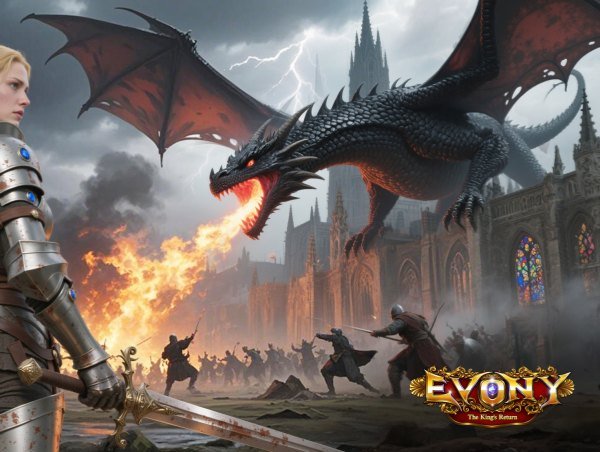
Many companies still optimise for visibility—rankings, launches, spikes. TGI is optimising for survivability across cycles. Its flagship title, Evony: The King’s Return, remains commercially strong not because it constantly reinvents itself, but because it functions as a living social system rather than a disposable product.
Newer titles, such as Run! Goddess, are best understood through the same lens: not as genre experiments, but as structural tests of how different user segments enter, stay, and deepen their engagement over time.
Resilience as Competitive Advantage
In an industry prone to cycles of overexpansion and painful contraction, Top Games’ restraint is paradoxical. What appears as caution is, in practice, a form of strategic assertiveness.
By 2026, resilience will not belong to the loudest publishers or the most aggressive spenders. It will belong to those who can fail without breaking, adapt without fragmenting, and grow without losing their internal coherence.
Top Games is betting that endurance itself will become the rarest advantage of all.